Surfing’s Quiet Danger: Why Head Injuries Are Still Surfing’s Most Ignored Threat
Surfing sells freedom and beauty, but beneath the perfect waves lies a quiet reality: head injuries are one of the sport’s most common — and most ignored — dangers.
Surfing sells freedom and beauty, but beneath the perfect waves lies a quiet reality: head injuries are one of the sport’s most common — and most ignored — dangers.
Surfing has always lived somewhere between sport and myth.
From the outside, it looks peaceful. Sunlight, slow horizons, surfers drifting across the water waiting for the next set. But anyone who’s spent real time in the ocean knows the truth: the sea doesn’t care about aesthetics.
It throws boards.
It slams bodies.
And sometimes it hits the head.
For decades, surfing has accepted head injuries as part of the deal — another story to laugh about on the beach after a session. But as the sport grows faster, heavier, and more crowded, that casual attitude is starting to look dangerously outdated.
Because if you look closely at the numbers, the lineup hides an uncomfortable truth:
Head injuries might be surfing’s most common and most underestimated danger.
The Board Is the Real Weapon
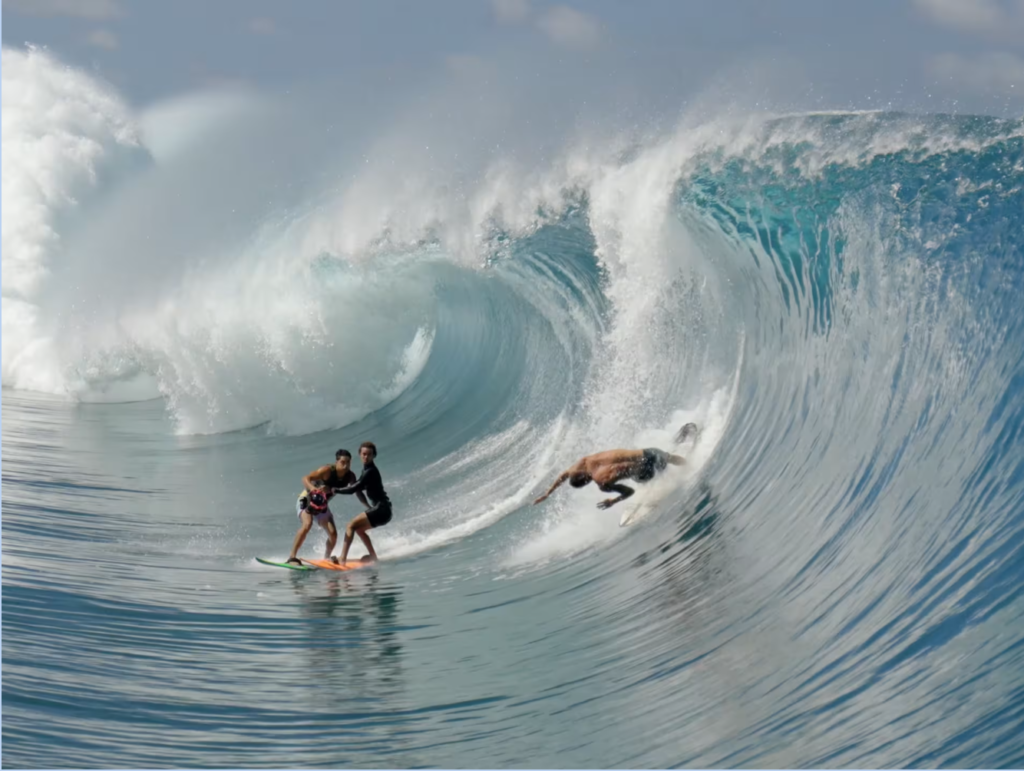
When surfers imagine injuries, they often picture reefs, rocks, or brutal wipeouts.
But in most cases, the thing that causes the damage is much closer.
Your board.
Studies of surf injuries consistently show that board impact accounts for the majority of head trauma in surfing. When a wave detonates a board back toward its rider, the speed and force can be shocking.
A fiberglass board driven by a breaking wave becomes a projectile.
Rails slice.
Fins stab.
Noses punch forward like spears.
Even a playful beachbreak session can turn ugly in seconds.
And unlike many other sports, surfers don’t wear protective gear.
The result?
Cuts, concussions, and occasionally something much worse.
Concussions in the Ocean Are Different
A concussion on land is serious.
A concussion in the ocean is a different level of problem.
Even mild head trauma can cause:
- disorientation
- blurred vision
- loss of balance
- delayed reaction time
All things you absolutely need when navigating waves, currents, and incoming sets.
In extreme cases, a surfer who briefly loses consciousness after a board strike can drown before anyone realizes what happened.
The ocean doesn’t pause the session.
The next wave simply keeps coming.
Surf Culture Still Rewards Toughness
Part of the issue is cultural.
Surfing has always celebrated resilience — the idea that you take a beating, laugh it off, and paddle back out.
The lineup has long operated on a quiet rule:
If you can still paddle, you’re fine.
Many surfers who experience concussion symptoms never report them or even recognize them as injuries. Dizziness, headaches, fatigue — they’re often brushed aside as just another rough wipeout.
But sports science tells a different story.
Repeated head impacts can accumulate damage over time, even if each individual hit seems minor.
And unlike organized sports, surfing rarely has medical supervision nearby.
The decision to keep surfing almost always belongs to the surfer alone.
Crowded Lineups Make Everything Worse
If surfing injuries were only about wipeouts, the risks would already be significant.
But modern surfing adds another factor:
Crowds.
Over the past decade, the global surf population has exploded. Beginner surfers, surf schools, rental boards, and social media have pushed more people into the water than ever before.
More surfers means more boards.
More boards means more collisions.
In busy lineups, accidents happen constantly — boards flying loose during wipeouts, beginners ditching boards, or surfers accidentally dropping into the same wave.
Most of the time it’s harmless.
Sometimes it’s not.
Why Helmets Haven’t Caught On
In theory, the solution seems simple.
Wear helmets.
Some surfers already do — especially in shallow reef breaks or heavy slabs. But across the global surf community, helmet adoption remains incredibly low.
The reasons are mostly cultural.
Surfers worry helmets look awkward.
They fear it affects balance or awareness.
And for many, it simply doesn’t fit the aesthetic of surfing.
Style matters in surf culture.
Sometimes more than safety.
Ironically, other board sports have already made the transition. Skateboarding, snowboarding, and mountain biking all experienced similar resistance before helmets eventually became common.
Surfing might simply be lagging behind.
The Ocean Is Getting More Extreme
Modern surfing isn’t the same sport it was thirty years ago.
Boards are lighter and faster.
Surfers are pushing heavier waves.
Air maneuvers send riders several meters above the water.
The consequences of mistakes are increasing.
At the same time, waves that were once quiet local breaks are now global surf destinations, packed with visiting surfers chasing clips and content.
More speed.
More people.
More risk.
And the human head was never designed to absorb repeated blows from fiberglass and water moving at twenty miles per hour.
Respect the Ocean — and Your Brain
Surfing will always carry risk.
That’s part of its appeal.
The ocean demands humility, awareness, and respect. But ignoring danger doesn’t make surfing more authentic — it just makes it more reckless.
As the sport evolves, so should the way surfers think about safety.
Not because surfing needs to become sanitized or over-regulated.
But because the ability to paddle back out tomorrow depends on the decisions we make today.
And sometimes the smartest move in the lineup is the one surfers least like to admit:
Taking care of your head.