If the World Falls Apart, Where Do You Paddle?
If the world ever slides toward another global war, survival might not depend on bunkers or borders — but on geography, neutrality, and how far a place sits from the fault lines of power.

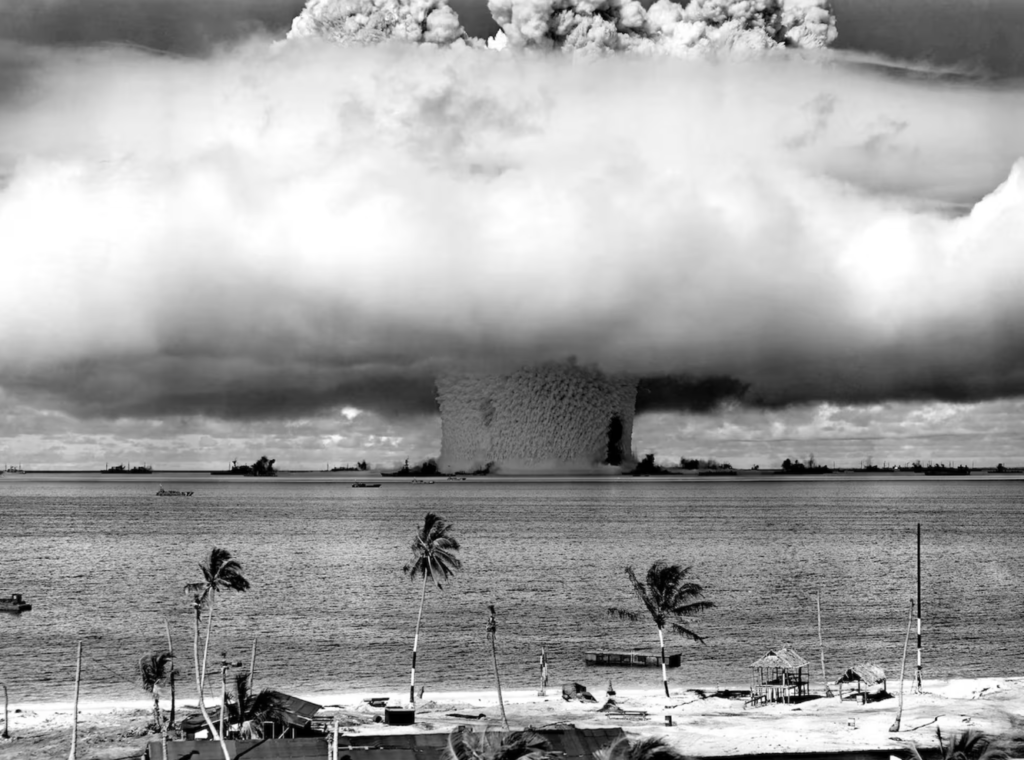
If the world ever slides toward another global war, survival might not depend on bunkers or borders — but on geography, neutrality, and how far a place sits from the fault lines of power.
The Surf Regions That Might Survive a Global War
When people imagine the end of the world, they rarely picture surfboards.
They imagine bunkers.
Missile silos.
Concrete shelters buried deep underground.
But if history has taught us anything, it’s that survival isn’t always about the strongest military. Sometimes it’s about geography.
Distance.
Isolation.
And whether anyone actually cares enough to attack your corner of the planet.
Right now, the symbolic Doomsday Clock sits just 85 seconds from midnight, the closest it has ever been, reflecting rising nuclear tension, geopolitical fragmentation, and accelerating global instability.https://www.surfer.com/news/world-war-iii-safest-countries?utm_source
It’s a grim statistic.
But buried inside the data is an unexpected twist:
Some of the places considered most likely to stay safe in a global conflict also happen to be some of the best surf zones on Earth.
The Geography of Survival
When analysts talk about “safe countries” in a global war scenario, they aren’t guessing.
They look at a few basic factors:
- geographic isolation
- political neutrality
- food and energy independence
- low strategic military value
Countries that are far from global power centers — and have the ability to feed themselves — are far less likely to become targets in a major conflict.
In other words:
If missiles start flying, the safest places may be the ones that feel the most remote today.
Places where the nearest capital city is thousands of miles away.
Places where waves roll in from empty horizons.
New Zealand — The Last Edge of the World
If the modern world collapses, many experts quietly point to New Zealand.
It’s isolated — truly isolated. Nearly 2,000 kilometers from the nearest large landmass. It’s politically stable, agriculturally rich, and far removed from the world’s largest military rivalries.
That combination has made the country something of a legend among geopolitical analysts and Silicon Valley billionaires alike.
But surfers already knew.
New Zealand has long been a sanctuary of wild coastlines and powerful cold-water waves. Long points, remote beaches, and windswept reefs stretch across two rugged islands.
If global civilization ever hits the reset button, it might happen somewhere along one of those empty coastlines.
Indonesia — The Quiet Giant
Indonesia might seem like an unlikely candidate.
It’s populous. Complex. Strategically located between Asia and Australia.
But geopolitically, Indonesia has long followed a policy of non-alignment, maintaining diplomatic balance between major powers.https://photonews.com.pk/safest-countries-world-war-iii-2025/#utm_source
More importantly, the country sits across 17,000 islands, many of them remote, fertile, and largely self-sufficient.
For surfers, Indonesia is already mythical.
Mentawai barrels.
Bali reefs.
Sumatran slabs.
If stability ever fractures globally, the vast archipelago could quietly become one of the most resilient regions on Earth.
Not because it’s powerful.
But because it’s enormous — and decentralized.
Chile — A Country Built on Natural Barriers
Look at a map and Chile almost looks like a mistake.
A thin ribbon of land squeezed between the Pacific Ocean and the Andes Mountains.
But those same barriers make the country unusually resilient.
The Andes form one of the largest natural mountain walls on Earth. The Pacific protects the west. And Chile’s agricultural output makes it relatively capable of sustaining its population during major global disruptions.https://unanswered.io/guide/which-country-most-likely-survive-world-war-3?utm_source
For surfers, the Chilean coastline is a 4,000-kilometer playground of cold-water points, reefs, and slabs.
It’s remote.
It’s raw.
And if global chaos ever spreads, it might also be surprisingly insulated.
Fiji — Paradise at the Edge of the Map
Then there’s Fiji.
A scattering of volcanic islands floating in the South Pacific, far removed from global power struggles.
Its isolation alone gives it a major advantage. In most global war scenarios, strategic military targets cluster around industrial centers, energy routes, and major cities.
Fiji has none of those.
What it does have is fertile land, fisheries, and one of the most famous surf breaks on Earth.
Cloudbreak.
Restaurants.
Namotu.
In a collapsing world, islands like Fiji might quietly continue their rhythm — tides rising, trade winds blowing, waves breaking across coral reefs.
The Reality Nobody Wants to Say
Of course, there’s an uncomfortable truth hidden behind all of this.
In a full nuclear war scenario, nowhere is truly safe.
Fallout spreads across continents.
Global trade collapses.
Food systems break down.
Even the most remote islands would eventually feel the consequences.
But survival has always been about probabilities.
And historically, the places that endure catastrophic events are often the same ones that feel distant from the world’s centers of power.
Remote coastlines.
Agricultural regions.
Island nations.
Places where the horizon is bigger than the skyline.
The Surfer’s Perspective
Surfers have always been drawn to the edges of the map.
Remote points.
Forgotten islands.
Coastlines where the only sound is wind and water.
Not because we were planning for the apocalypse.
But because the best waves have always lived far away from the noise of civilization.
And if the worst ever did happen, it’s strangely fitting that the safest places might also be the ones surfers have been quietly chasing all along.
Empty lineups.
Open horizons.
And waves still breaking — long after the world has changed.