The Forbidden Island: The Rare Tour That Lets You Step Foot on Hawaiʻi’s Most Mysterious Land
Seventeen miles off Kauaʻi lies an island few outsiders have ever touched — a place where Hawaiian culture survives, tourism barely exists, and the modern world stops at the shoreline.
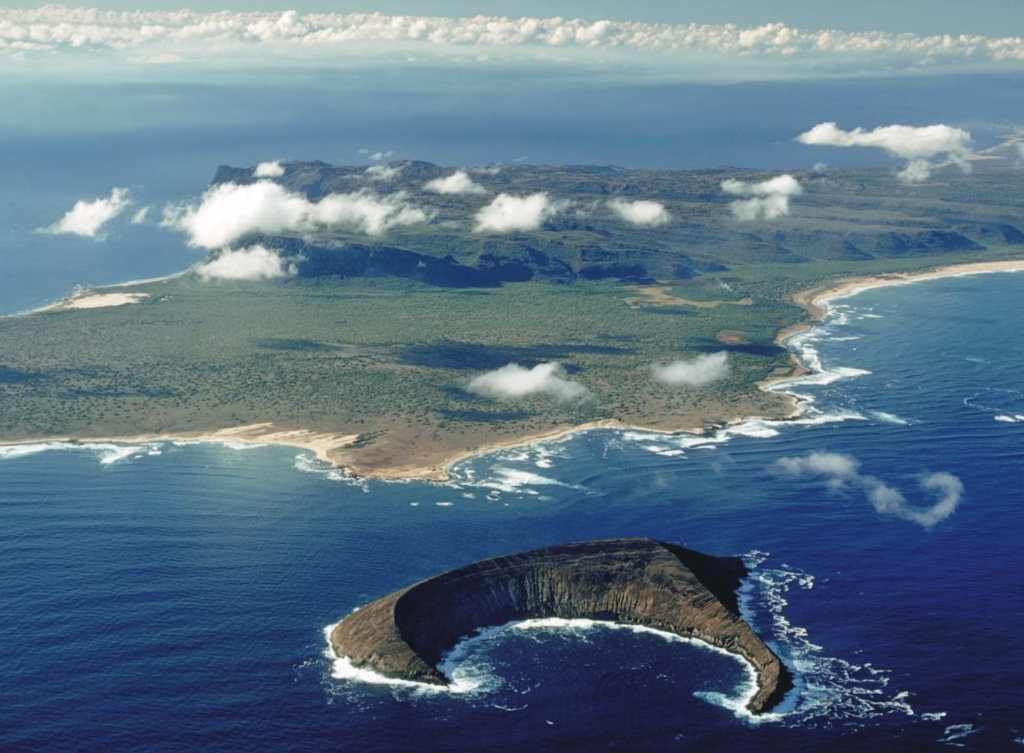
Seventeen miles off Kauaʻi lies an island few outsiders have ever touched — a place where Hawaiian culture survives, tourism barely exists, and the modern world stops at the shoreline.
Just 17 miles across the Kaulakahi Channel from Kauaʻi lies one of the most mysterious places in the Pacific.
An island where outsiders almost never go.
An island where the Hawaiian language is still spoken daily.
An island where the modern world — smartphones, traffic, tourism — has barely arrived.
Welcome to Niʻihau, better known as Hawaiʻi’s Forbidden Island.
For more than a century, the island has remained almost completely closed to the outside world. But recently, a small number of highly controlled tours have begun offering a rare glimpse into one of the most isolated corners of Hawaiʻi.
And even then, the rules are strict.
A Hawaiian Island Frozen in Time
From the air, Niʻihau looks like something from another era.
Dry volcanic ridges rise above empty coastlines. Long stretches of untouched beaches curve around turquoise water. There are no high-rise resorts. No cruise ships.
In fact, there’s almost nothing at all.
The island — about 70 square miles in size — is privately owned by the Robinson family, who purchased it from King Kamehameha V in 1864.https://www.upi.com/Archives/1987/06/13/Visitors-finally-allowed-on-Forbidden-Island/3790550555200
Today only around 70 Native Hawaiian residents live there, maintaining a lifestyle largely disconnected from the outside world.https://hawaii.com/blog/niihau-island-the-forbidden-island-of-hawaii
Most speak Hawaiian as their first language, making Niʻihau one of the last places on Earth where the language is used in daily life.https://hawaii.com/blog/niihau-island-the-forbidden-island-of-hawaii
For decades, the island’s extreme privacy earned it the nickname:
The Forbidden Island.
Why Almost Nobody Is Allowed to Visit
The restrictions on Niʻihau didn’t happen by accident.
In the early 20th century, the island’s owners limited outside contact to protect residents from diseases that devastated other Hawaiian communities.https://enviroliteracy.org/is-there-a-hawaiian-island-that-you-cannot-visit/
Over time, that quarantine evolved into a strict policy of isolation designed to preserve both culture and environment.
Today, access is still extremely controlled.
Generally, only the following people can land on the island:
- Niʻihau residents
- The Robinson family
- Invited guests
- Government officials or military personnel
For everyone else, entry requires special permission — something rarely granted.
Which is why the recent tourism loophole has caught so much attention.
The Tour That Lets Outsiders In
For years, the only realistic way for outsiders to experience Niʻihau has been through exclusive helicopter or safari tours operated by the island’s owners.
These trips typically depart from Kauaʻi and land on a remote, uninhabited beach far from the island’s village.https://www.hawaiimagazine.com/how-to-visit-niihau-the-forbidden-island-of-hawaii/
Visitors are allowed to:
- snorkel in untouched reefs
- explore isolated white-sand beaches
- see monk seals, sea turtles, and tropical fish
- walk along coastlines few people on Earth have seen
What they cannot do is interact with the island’s residents.
The separation is deliberate.
The goal is to allow visitors to experience the landscape without disturbing the community that lives there.
A Different Kind of Hawaiian Tourism
In a state built on tourism, Niʻihau represents the opposite philosophy.
There are no resorts.
No beach bars.
No surf schools or rental boards.
Instead, the island preserves something rare: Old Hawaiʻi.
Visitors often describe the experience as stepping backward in time — into a version of the islands that existed before mass tourism transformed the archipelago.
And the ocean surrounding Niʻihau reflects that isolation.
The reefs remain some of the most pristine in the region, filled with marine life rarely seen near heavily visited coastlines.
For divers and snorkelers, the waters around Niʻihau are legendary.
The Price of Secrecy
Of course, access to such a rare place doesn’t come cheap.
Helicopter tours to Niʻihau can cost around $400–$500 per person, while hunting safaris on the island can exceed $1,900 per day.https://www.hawaiimagazine.com/how-to-visit-niihau-the-forbidden-island-of-hawaii/
But for many travelers, the cost is part of the appeal.
Niʻihau isn’t designed for mass tourism.
It’s designed to stay mysterious.
The Last Hidden Island
In a world where nearly every coastline has been mapped, photographed, and geotagged, Niʻihau remains something extraordinary.
A place that still feels undiscovered.
No crowds.
No development.
No Instagram hotspots.
Just wind, lava rock, and the endless Pacific.
And for the few lucky visitors who manage to step ashore, the experience comes with a simple realization:
Some places are powerful precisely because they refuse to change.